REVIEW · CANAKKALE
Canakkale: Half-Day Troy Tour
Book on GetYourGuide →Operated by Crowded House Tours · Bookable on GetYourGuide
Homer’s Troy feels real when you walk it. This half-day tour is a focused, guided circuit through the 3,700-year-old city walls and the layered settlements laid one atop another, where the myths feel grounded in stone. I also like the English-speaking guide who connects the legend of Troy to the archaeology, from Heinrich Schliemann’s 1870s discovery work to what’s still being uncovered today. One possible drawback: it’s tightly timed, so you won’t include lunch or a stop at the Museum of Troy.
You’ll be picked up from your Canakkale hotel near the harbor, drive about 30 minutes to Troy, get roughly two hours on site with your guide, then return the same way. If you want a strong intro to Troy without committing a full day, this is built for you.
In This Review
- Key highlights at a glance
- From Canakkale to Troy: the half-day rhythm that keeps it easy
- Troy’s layered city: nine settlements stacked like a history lesson
- Walking the 3,700-year-old walls (and why they matter)
- Sacrificial altars and the open-air theater: myth meets built space
- Everyday houses: seeing how people lived three millennia ago
- Excavations and finds: why 150+ years still feels alive
- The mythology layer: how your guide connects names to places
- Timing, breaks, and what you might want to do next
- Price check: is $93 a good value for what you get?
- Who should book this Canakkale Troy half-day tour?
- Should you book it?
- FAQ
- How long is the Canakkale half-day Troy tour?
- What does the tour include?
- Is lunch included?
- Is the Museum of Troy included?
- How much time is spent in Troy with the guide?
- How long is the drive from Canakkale to Troy?
- What kind of walking is involved?
- Is the tour wheelchair accessible?
- What language is the tour guide?
- Can I cancel for a full refund?
- Is there a reserve and pay later option?
Key highlights at a glance
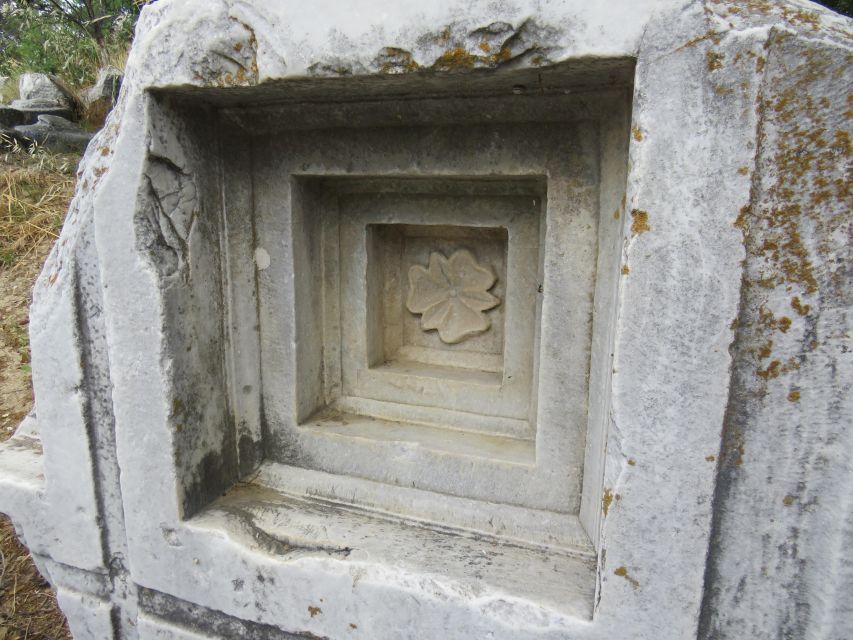
- Walk Troy’s defensive walls that still make a strong impression today
- See layered ruins from nine cities built atop each other, before 3500 B.C.
- Spot recent excavations that have produced finds for more than 150 years
- Hear the Trojan War story tied to myths, legends, and what archaeologists found
- Stand near sacrificial alters and the open-air theater
- Get a practical half-day plan with hotel pickup and an air-conditioned ride
From Canakkale to Troy: the half-day rhythm that keeps it easy
The day starts right at your hotel. You’ll be met by your driver for a roughly 30-minute ride from Canakkale to Troy. This matters more than it sounds, because Troy is a specific, concentrated site—so the time you save getting there lets you spend it walking and listening instead of waiting.
Your guided portion is about two hours on site. That’s enough time to get the big picture and still move around at a comfortable pace, especially because the tour includes both monumental bits (city walls, theater) and quieter, everyday remains (house foundations). When you’re done, you re-board the vehicle and head back to Canakkale, where the tour ends at your hotel area.
If you’re traveling as a couple or solo and you want an efficient “greatest hits” Troy experience, this schedule fits well. If you’re the type who wants to linger over every sign and then add the museum, you’ll likely feel rushed—mainly because the tour does not include the Museum of Troy.
You can also read our reviews of more tours and experiences in Canakkale.


Troy’s layered city: nine settlements stacked like a history lesson
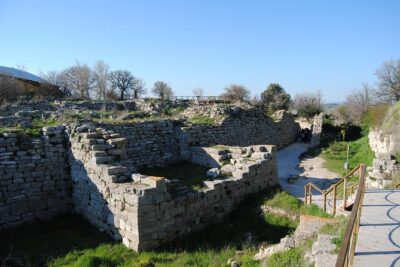
What makes Troy so special isn’t just that it’s famous. It’s that it’s stacked. On this tour, you’ll learn how nine cities were found built one on top of another, reaching back to before 3500 B.C. That layered setup turns the site into a real-time history scale: older levels sit under later ones, and you can’t fully understand the place without knowing that time keeps piling up here.
This is where a good guide makes a difference. The myths give you names—Achilles, Hector, Helen—but the guide helps you translate those stories into a sense of lived reality: defensive planning, repeated rebuilding, and why the city stayed important enough to be rebuilt again and again.
You’ll also hear about how Troy entered the modern world through archaeology. The story begins with Heinrich Schliemann’s work in the 1870s and continues with excavations that have been ongoing for well over 150 years. Even if you don’t memorize the timeline, you’ll start noticing how archaeology works: the site isn’t static, and it keeps yielding new understanding (and yes, sometimes new treasures).
Walking the 3,700-year-old walls (and why they matter)
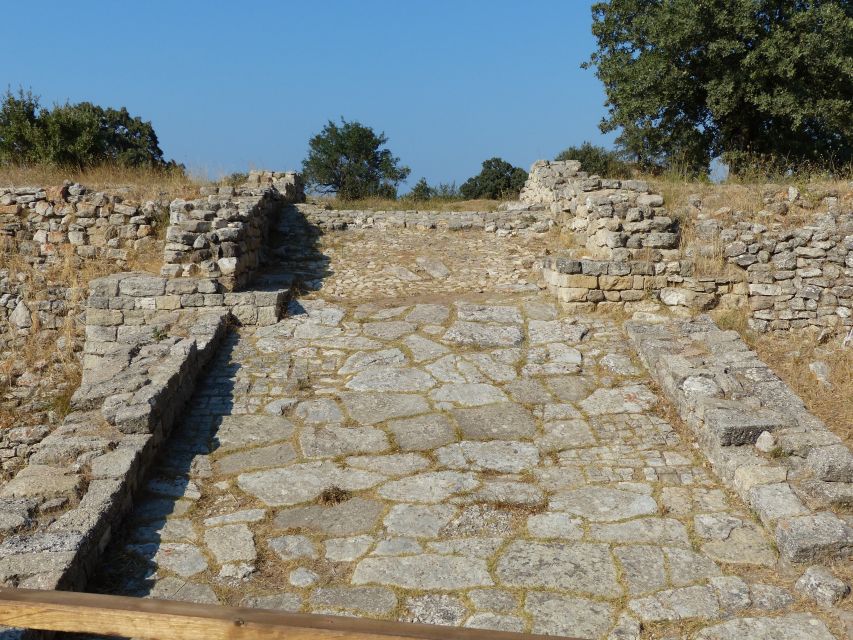
The centerpiece of the experience is a guided walk along the defensive walls. These aren’t replicas or viewpoint platforms—you’re actually moving in the presence of structures that helped a city endure for ages. When you stand and look at them, it’s easy to understand why Troy became a stage for dramatic tales in the first place: walls weren’t decorative here; they were survival gear.
Your guide connects the walls to the story of the Trojan War. Even if you’ve only heard the broad plot, you’ll start tying geography to legend—where defense mattered, how the city was organized, and why an invading force would need more than luck to take it.
Practical note: expect a walk. This tour is not suitable for wheelchair users, and you’ll be on uneven, historical terrain. Wear shoes you trust, and plan on moving.
Sacrificial altars and the open-air theater: myth meets built space
One of the most striking parts of Troy isn’t a wall or a foundation—it’s the feel of the public spaces. You’ll stand before ancient sacrificial alters, and you’ll also visit the city’s open-air theater.
These stops help you see Troy as more than a war story. Sacrifice areas point to religious life and civic ritual, while the theater suggests public gathering—people watching, listening, and sharing stories. That’s a key reason this tour works for first-timers: it doesn’t only show you fortifications. It gives you a sense of how the city functioned.
You don’t need a background in classics to enjoy this section. Your guide is there to translate what you’re seeing into myth and context. If you’ve ever felt that archaeology tours get too dry, the theater and altars are the places where the meaning clicks.
Everyday houses: seeing how people lived three millennia ago
Troy isn’t just monumental. This tour includes time to walk past the remains of everyday settlements, including ruins of houses dating back more than 3,000 years. That’s a big deal, because it shifts the focus from famous names to normal life.
Here’s what you’ll likely take away: a city isn’t just a place where battles happen. It’s where families built homes, repaired daily infrastructure, and adapted as new cities rose over old ones. Standing near these remains helps you understand why Troy endured as a location for so long—resources, terrain, and strategic value all mattered, but people also wanted to live there.
This portion also helps you appreciate the layered nature of the site. As the guide explains how later settlements were built over earlier ones, you’ll start noticing that the site feels like a long story written in layers, not a single “moment” preserved for display.


Excavations and finds: why 150+ years still feels alive
Troy is one of those places where archaeology is part of the atmosphere. You’ll look at recent excavations and learn why the site continues to produce treasures after more than 150 years of archaeological work.
That ongoing research is valuable to you as a visitor because it changes the tour from a museum-style stop into a living investigation. Instead of treating Troy as a sealed chapter, the guide frames it as something still being studied: new evidence, new interpretations, and better connections between legend and physical remains.
It’s also a good reminder that what you see depends on what’s been excavated and preserved. Not every layer is exposed at once, and not every discovery makes the headlines—but you’re still getting a tour that acknowledges the work being done today, not just the “famous discovery” from long ago.
The mythology layer: how your guide connects names to places
The tour is built around one key idea: you can’t separate the myths from the city. Your guide explains the mythology surrounding Troy and then places that mythology next to the real, physical remains.
If you’re into the Trojan War, you’ll hear the connections between major figures and the larger story. If you’re not, you’ll still get something useful: a guided framework for understanding what the site is showing you. Without that framework, Troy can feel like impressive ruins with no “story spine.” With it, you’re walking with a mental map.
This is one reason the English-speaking guide experience is so central to the value here. You’ll get the explanation in real time, while you’re standing where the story takes shape. That’s harder to replicate on your own when you’re focused on reading signs and trying to imagine how everything fit together.
Timing, breaks, and what you might want to do next
This is a short tour, and it stays short on purpose. You’ll spend about two hours guided at Troy, then return to Canakkale. Lunch isn’t included, and the Museum of Troy isn’t included either—so your timing plan should account for where you’ll eat afterward.
One practical heads-up: there can be a short break tied to the experience, and the stop may not be at the official gift shop. If buying a specific souvenir from the official shop matters to you, plan to handle that before or outside this tour window. The key idea is simple: don’t assume you’ll have a long shopping period later.
If you want to add more depth, consider pairing this with another visit that includes the museum, or do your museum time on a separate day. For many first-timers, this two-hour guided focus is the right “starter,” while museum time is the “slow-down and read” follow-up.
Price check: is $93 a good value for what you get?
$93 per person for a 3-hour half-day can look steep at first glance—but in this case, it adds up because several costs are covered. You get hotel pickup in Canakkale, round-trip transport in an air-conditioned non-smoking vehicle, a professional English-speaking guide, and entrance fees to the ancient city of Troy.
The “value” equation is about efficiency. You’re paying for someone to do the storytelling on site and to handle the logistics so you don’t spend your limited time figuring out how to get there, where to start, and what’s most important to see. If you’re the kind of traveler who enjoys learning while walking, the guided time is often worth more than the entrance fees by themselves.
Where the value might not fit you: if you’re hoping for a longer on-site visit, lunch included, or a museum stop. This tour is designed as a hit list—great for first-timers, less ideal for people who want a slow, deep, all-day pace.
Who should book this Canakkale Troy half-day tour?
This works best if you:
- Want a strong intro to Troy in a limited time window
- Like your history explained while you’re looking at the actual remains
- Prefer guided walking over reading signs solo
- Don’t mind that the tour is not set up for a museum visit afterward
You might want to think twice if you:
- Need wheelchair-accessible routing (this one isn’t suitable for wheelchair users)
- Want lunch included
- Plan to spend extra time in the Museum of Troy as part of the same experience
If you’re traveling with kids, this can work too, as long as your group enjoys stories connected to real places. The guided myth-to-history approach is often easier for younger attention spans than a self-guided archaeology grind.
Should you book it?
Yes—if you want a smart, time-efficient Troy experience from Canakkale. I like that the tour focuses on the big, meaningful anchors: walls, layered ruins, excavations, and key built spaces like the theater and sacrificial areas. The guide-led explanation is where the value really shows, turning the myths into a walking story you can follow.
If your priority is museum time, unhurried wandering, and meals on schedule, then you may want a different format or to add your own extra stops afterward. But for a half-day with clear structure and hotel convenience, this is a solid choice for getting your bearings fast at Troy.
FAQ
How long is the Canakkale half-day Troy tour?
The total duration is 3 hours.
What does the tour include?
It includes pickup from your Canakkale hotel around the harbor, an English-speaking professional guide, entrance fees to the ancient city of Troy, and transportation in an air-conditioned non-smoking vehicle.
Is lunch included?
No, lunch is not included.
Is the Museum of Troy included?
No, the Museum of Troy is not included.
How much time is spent in Troy with the guide?
The guided tour at Troy is about 2 hours.
How long is the drive from Canakkale to Troy?
The drive is about 30 minutes each way.
What kind of walking is involved?
You’ll walk around the ancient site, including areas like the city walls and ruins of settlements/houses.
Is the tour wheelchair accessible?
No, the tour is not suitable for wheelchair users.
What language is the tour guide?
The tour guide provides the tour in English.
Can I cancel for a full refund?
Yes. You can cancel up to 24 hours in advance for a full refund.
Is there a reserve and pay later option?
Yes. You can reserve now and pay later.